Tuesday, April 9, 2019

The Real Cost of Water

The Real Cost of Water
Written by: Katie B

Water scarcity isn’t a term that gets used very much in the United States. However water day zero is slowly approaching all of us and little, to nothing is done to stop it. Scientists predict that water demand will be greater than the water supply in just over 10 years if this rate continues.  It is clear that if the government or the people don’t step in and make a big effort to change our water usage, day zero will hit us faster than we can prepare for it.

Image result for supply and demand government subsidyOne of the major problem leading the water crisis is the agriculture use of it. 70% of the world's freshwater is used in agriculture. Irrigation systems are a major water waster and pump water at a unsustainable level out of reservoirs, however it is estimated that 60% of this water is lost due to leaks and other inefficiencies. Not only are we wasting water on irrigation but we are doing so in a state that is notoriously dry, California. The state of California accounts for 11% of the United States agriculture (Cook). How has the drought affected this? Well the scarcity of water led the government to take action, since 1995 California farmers in Fresno County have collected one billion in farm subsidies. Farmers are not paying the full cost of their water usage due to government subsidies. When farmers don’t pay the full cost of water, it is wasted, and used unsustainably.

There are a few solutions to this growing problem but they all carry their own economic cost. One trend that has been picking up speed is desalination. Ocean water is undrinkable unless it has gone through a rigorous process of being desalinated (removal of salt). In 2014 the desalination Encina power plant was built for a staggering price of one billion dollars. This price does not include daily operation and according to Mercury News the cost of running this desalination plant costs 4 times as much as changing current processes to be more conservative with water use. If desalination was to become more widely used there would be a multitude of other costs including transportation, energy costs, and the costs to the environment. Despite these costs desalination may be the future as we continue to over-pump aquifers, dry up rivers, and treat water like an inexhaustible resource.


Image result for cape town water crisisCape Town South Africa was recently faced with their own day zero, and without government and community involvement could have face disastrous consequences. With day zero looming overhead water limits were placed on citizens to 13 gallons a day. Along with this the city was forced to fix their water inefficiencies such as leaky pipes (saving 13 million gallons daily), and farmers were given strict quotas. All of their efforts ended up pushing back their day zero and they set an example for how water should be valued globally.

The lower the cost of water the more of it is wasted. If water continues to remain criminally underpriced, arguably our most precious resource will become increasingly obsolete. However by fixing inefficiencies and banding together to conserve water change can be made. Whatever the costs may be now, they will be tenfold in the future if this problem continues to worsen.

Works Cited
Laudicina, Paul. “Water Day Zero Coming To A City Near You.” Forbes, Forbes Magazine, 7 June 2018, www.forbes.com/sites/paullaudicina/2018/06/07/water-day-zero-coming-to-a-city-near-you/#6ef2f79b1738.

Lohan, Tara. The. “The Global Water Crisis May Have a Surprising Solution.” EcoWatch, EcoWatch, 11 Mar. 2019, www.ecowatch.com/global-water-crisis-2631317903.html.

Rogers, Paul, and Paul Rogers. “Nation's Largest Ocean Desalination Plant Goes up near San Diego; Future of the California Coast?” The Mercury News, The Mercury News, 23 Jan. 2017, www.mercurynews.com/2014/05/29/nations-largest-ocean-desalination-plant-goes-up-near-san-diego-future-of-the-california-coast/.

Smedley, Tim. “Future - Is the World Running out of Fresh Water?” BBC, BBC, 12 Apr. 2017, www.bbc.com/future/story/20170412-is-the-world-running-out-of-fresh-water.
Cook, Rob. “States That Produce The Most Food (By Value).” Beef2Live, beef2live.com/story-states-produce-food-value-0-107252.

Stoddard, Ed. “Cape Town 'Day Zero' Pushed Back to 2019 as Dams Fill up in South...” Reuters, Thomson Reuters, 3 Apr. 2018, www.reuters.com/article/us-safrica-drought/cape-town-day-zero-pushed-back-to-2019-as-dams-fill-up-in-south-africa-idUSKCN1HA1LN.

Friday, April 5, 2019

Kohls Influencing the Economy

Kohls Influencing the Economy
Written by: Olivia A. 

Michelle Gass, the CEO of Kohl's department store is using innovative ideas to make sure Kohl's remains a relative competitor in the business world. Ever since online shopping has become popular among the current generation retail stores are losing customers due to online shopping. However bringing in a new and experienced business women has brought much attention to Khols which will in the end hopefully keep this store up and running.

Recently we have seen many of these retail stores such as Shopko, Sears, Toys R Us and Boston Store have all went out of business. These used to be very popular stores that families relied on for clothing and workers relied on for paychecks. This means a decrease in consumer spending and an increase in unemployment. All of these are chain stores too, so the closing of these brands affects individuals all around the US. Not only did it affect the workers but it affects the Manufacturers of brands of clothing, appliances, etc. that sell to these stores. If these brands are no longer able to be put into stores such as Kohl's they are also not earning as large of a profit as they could be making.

Michelle Gass wanted to keep Kohl's a viable and successful stores by introducing some fresh ideas. One of the main ways she hopes to keep Khol’s alive is by integrating a new department. This new department will allow individuals to return their previously purchased Amazon products at Kohl's (CEO talks). While the individuals are returning their no longer wanted products management at Kohl's hopes that this will bring many potential customers who are willing to spend money on Kohl's products. Since so many people are buying offline, Kohl's is now offering a very easy way to return items and this innovation will create more foot traffic. Not only will it increase consumer spending in stores but it will also open up jobs for the unemployed.

In order to keep this store relevant Gass also had the idea of having a gym and food store attached to Kohl's (Romell). Kohl's is starting to sell a lot of names brand athletic gear such as Under armour so attaching a gym will target the young adult market. Also adding a food store onto Kohl's will attract a wide variety of a target market. Customers will be able to have a variety of what they are shopping for whether that is groceries, athletic gear or any other products Kohl's already sells. Hopefully these ideas will prove to be successful for Kohl’s and the economy in the future.


Works Cited
“CEO Talks: Kohl's Michelle Gass Makes Waves.” We Find Leaders, www.herbertmines.com/media/ceo-talks-kohls-michelle-gass-makes-waves.

Romell, Rick. “A Khaki Library, New Brands and Wisconsin Nice: How Kohl's CEO Michelle Gass Is Changing the Company.” Milwaukee Journal Sentinel, Milwaukee Journal Sentinel, 29 Mar. 2019, www.jsonline.com/story/money/business/retail/2019/03/29/kohls-ceo-michelle-gass-values-experimentation-even-failures/3293305002/.

Is the US government dialing back on their recessionary stimulus measures too slowly?

Is the US government dialing back on their recessionary stimulus measures too slowly?
Written by: Maya Flynn

During the 2008 recession the US government implemented economic stimulus to bring back economic activity. Two of the main ways that they did this was buying bonds and dropping the overnight lending rate. The Fed sets the lending rate, which is essentially a baseline for many other borrowing rates for things such as loans and mortgages. The drop in the lending rate helped create economic activity because there was more investment being made when there was low interest. As for the bonds that were bought, it put more money into the flow of the economy and helped businesses. Having these two strategies were key in getting the economy back on track.

The remaining problem is, now that we are out of the recession, the Fed has to put things back to where they were. If they put the lending rate up to fast it will freeze investors and create more problems for the economy. However by leaving it down, there is a risk for creating lots of inflation. In past recessions we got out of it with a surge of activity where the government could jump it back up;however, this recovery has been slow and gradual which is why the rate came up slowly. This isn’t necessarily bad because it means that our economy is pretty stable, but it leaves problems with the rate. Now after 10 years the rate has made progress to get back up to a safe point, but it still isn’t there yet. “The Fed has slowed down their plan of raising the rate to make sure they don’t contribute to the slowing of the economy.  If the current predicted slowdown does occur, there are expectations that they will need to move the rate lower again towards the end of this year. They will be very hesitant to do this as their ultimate desire is to get the rate higher than it is now”(Forbes). The Fed has also stated that they will manipulate the market to keep the inflation at 2% to give investors and businesses confidence and set the expectations for the economy. Having the rate all the way up would give further security because if there is another bad recession there would be room to drop the rates to help again, without dropping them too low.


Additionally the bonds that the government bought remain a problem. The Fed bought 4.5 trillion dollars in bonds, and have only made back 1 trillion so far. If they do this too quickly they will pull too much money out of the market and cause a crash. They have been doing it gradually at 50 billion per month, but beginning in 2019 they have been dialing that back. The concern is that after 10 years the government is still missing 3.5 trillion dollars. If there is a recession again soon, the government will be limited in the amount they can buy so they don’t have overwhelming debt.

This is a cause for concern because the economy is showing signs of slowing again. If another recession occurs the government isn’t in a great position to take measures to fix it. On the other hand, if they rush the process to get back to a safer spot, they will at least cause problems if not a recession. So overall what they are doing is playing it safe and taking slow, which leaves risk for a recession.


Works Cited

Rapoza, Kenneth. “2019 Will Be A Tough Year For Trump And His Economy.” Forbes, Forbes Magazine, 11 Dec. 2018, www.forbes.com/sites/kenrapoza/2018/12/11/2019-will-be-a-tough-year-for-trump-and-his-economy/.

Bartash, Jeffry. “A Strong, Improving Jobs Market Outweighs All the Bad News Recently on the Economy.” MarketWatch, 4 Mar. 2019, www.marketwatch.com/story/all-the-bad-news-on-the-economy-cant-overshadow-where-the-real-strength-lies-2019-03-02.

Sage, Alexandria. “Fed's Powell Says No Immediate Policy Responses Needed to Economy.” Reuters, Thomson Reuters, 9 Mar. 2019, mobile.reuters.com/article/amp/idUSKBN1QQ032.

Thursday, April 4, 2019

How Much Money do you Deserve?

How Much Money Do You Deserve?
Written by Emma George

As high school students, we are on the search for a job to save for college or to buy any goods we have in mind. Being either younger than 18 or in need of more education, we are forced into the system of a minimum wage job. For me, on the search for a job, I looked for a high starting salary and an activity that would interest me. There’s a wide variety of job options with different levels of payment. For example, at Target I would get paid $12 but management was poor and I’d be stacking boxes all day. At Cafe Hollander (my current job) I would be paid minimum wage ($7.25) with good tip money and quality management. At Kohls, I’d be making $8.25 with good management but going bored out of my mind. Looking at all these options, I surprisingly choose the lowest paying job when looking at these statistics. However, with tips, I actually make around $11 an hour for running around seating people, going up and down stairs excessively, and cleaning tables constantly. Even still, I’d like a bigger paycheck, would you? Want to start a union with me?
Image result for minimum wage tracker
During my hunt for a job, I assumed I’d want the job that pays the highest. Businesses are smart, they know this. They also know that with a higher wage, the fewer hours they will be willing to provide me. In contrast, they know more people will come to work for them with good pay. Currently, the minimum wage across the country varies. “By 2022, 17 percent of Americans will live in a city or state with a $15 minimum wage.” Specifically, Amazon is looking to boost their pay to $15 an hour. Will these higher paying jobs do well for the economy and boost job growth? Or do places that have fast job growth, raise wages? Now as an on-looker for a higher paying job, if the minimum wage was raised, some people argue that this would benefit the economy allowing the lower class to spend more thus driving the demand. As people are able to buy more they also are able to buy higher priced goods. Therefore, businesses can raise prices and still get people to pay for their items. This see-saw effect doesn’t seem to improve the economy in my opinion. In fact, this reminds me of inflation. The more we get paid, the higher goods will be priced and we will go back to where we started. While it’s complicated to determine the best wage, we see that in our country, each state has a different minimum wage point. Our neighbors in Minnesota get paid minimum $9.65 working the same job just in another state. So obviously some politicians need to get to work and fix this issue before my union strikes.


Another interesting takeaway, the supply of workers to be a host is high, while the supply of skillful soccer players is low. Vise-versa for demand. The demand for world-class soccer players is high while restaurants aren’t going door to door looking for hosts. However, even with a multitude of capable hostess, they won’t get any workers in the door if there is a better opportunity cost somewhere else. When I work at Cafe Hollander I consider if I could be making more money with my time somewhere else. “Price equilibrium is the wage at which the number of jobs exactly matches the number of workers willing to labor at that price.” (UCLA Anderson School of Management) This is how the equilibrium point can be made and how $7.25 is Wisconsin’s starting wage. While I don’t have the skill set (sadly) to be the next Ronaldo, do I still deserve $7.25 an hour?

There’s a lot to debate here so let’s leave it to the comments to sort this out....

Works Cited
CrashCourse. “Labor Markets and Minimum Wage: Crash Course Economics #28.” YouTube, YouTube, 27 Mar. 2016, www.youtube.com/watch?v=mWwXmH-n5Bo.

“Through the Minimum Wage Looking Glass: Economic Consensus Unrealized.” UCLA Anderson School of Management, 3 Oct. 2018, www.anderson.ucla.edu/faculty-and-research/anderson-review/minimum-wage-primer-leamer.

Inflation on the Prices of Insulin

Inflation on the Prices of Insulin
By Ragini Suttar

9.4% of the current population in America has diabetes. That is around 30.3 million people; all of whom rely on insulin to survive. Created in 1921, insulin has been used as the main source of treatment for the blood disease for the better part of the century. It was discovered by Canadian researchers (Frederick Banting and Charles H. Best) when they isolated the hormone in a lab. Because of the life-saving properties (type 1 diabetes is fatal without insulin) the researchers who found the treatment were awarded a Nobel peace prize for their discovery. However, after realizing the importance of distributing the drug in an affordable way, Banting and Best sold the patent for the formula to the University of Toronto for a mere 3 dollars.

Unfortunately, the good intentions of Banting and Best have been exploited by Big Pharma and the current price of insulin has skyrocketed from the original price. The original price of 3 dollars has inflated by a whopping 700% to around 270 dollars per vial. However, the cost of production for one vial (10 mL) of insulin is only around 5 dollars. These statistics leave many wondering, “How did this happen?”.  Currently, the patent for insulin is held by three major pharmaceutical manufacturers: Eli Lilly and Co, Novo Nordisk, and Sanofi. Due to the monopolistic nature of having three main manufacturers, the competition between these companies rapidly results in heightened prices. Added with the fact that insulin is an inelastic good ( without it, type 1 diabetes patients will die),  consumers will have to continue to buy insulin with the ridiculous prices. 

This is usually the point where consumers would turn to a generic brand for lower prices, but this also proved ineffective as the patent was held exclusively to the three big pharma companies. That was until earlier this year when Eli Lilly announced that they would be launching a generic brand named “Lispro” who would sell insulin for $137.35 for a vial; a 50% decrease from the Eli Lilly price of $274.70. Even though this is a major step forward from past prices, this new price will only cost one arm from the previous price of an arm and a leg! The price of $137.35 is better, but the lower class citizens will still have to struggle with affording the drug, especially when many of these citizens don’t have health insurance to help pay off these costs. Due to this problem, many diabetic patients have problem-solved with rationing their doses. This should not be done and is nearly as fatal as not taking the drug itself. In 2017, 3 people died from rationing their medicine.

Why hasn’t the government successfully inhibited this inflation? The way that the government can affect the prices of a good is by placing price ceilings on goods. However, due to the way the drug is produced, the price ceiling can not be put on insulin as a whole, but on the patent for the insulin. To evade the price ceilings, big pharma companies usually minorly manipulate the formula and pass a new patent. Because of this evasion, the government has not been able to successfully regulate the price of insulin. This leads to the price-control plan that the Obama administration started and the plans that the Trump administration plans to activate. This plan would involve allowing imports of cheap drugs (currently illegal unless the need is temporary) or implementing similar structures that European countries have on drugs. While the plans for these actions are being debated, big pharma companies are extremely against these plans as they will cut down revenue by millions. Though their opportunity cost will be millions of lives saved and a healthier America.

Image Links

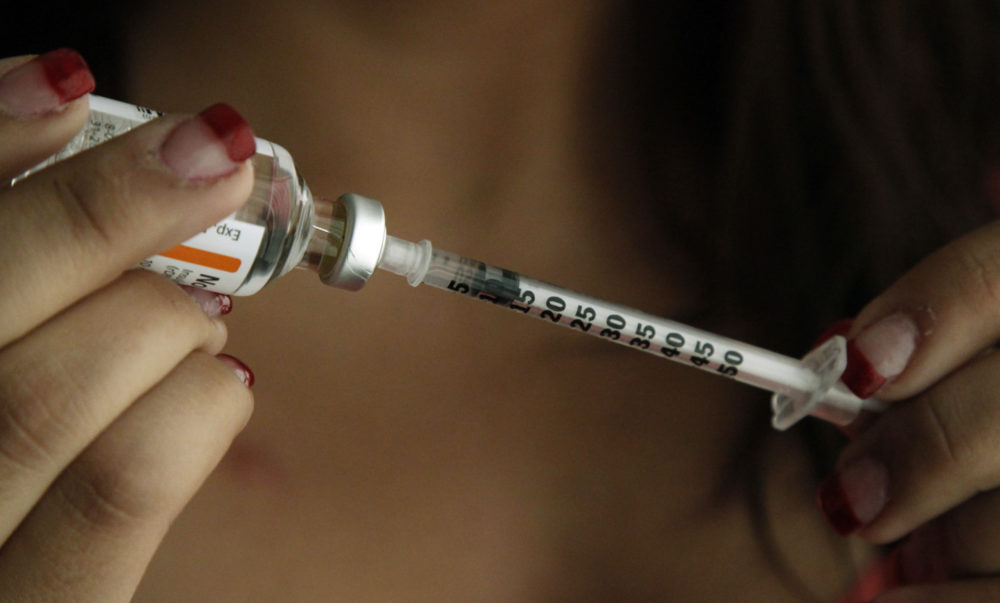
Insulin Bottle
http://d279m997dpfwgl.cloudfront.net/wp/2018/11/AP_120429046457-1000x603.jpg

Chart https://img.washingtonpost.com/blogs/wonkblog/files/2016/10/2300-insulin-price-changes-unadjusted.jpg

Class Ideas are underlined

Works Cited
Barlow, Rich. “Insulin Inflation Is Killing People. Something Needs To Be Done .” Insulin Inflation Is Killing People. Something Needs To Be Done  | Cognoscenti, WBUR, 27 Nov. 2018, www.wbur.org/cognoscenti/2018/11/27/protests-insulin-prices-rich-barlow.

Board, Spring 2019 Editorial. “EDITORIAL: What Eli Lilly's New Insulin Says about Our Health Care System.” Indiana Daily Student, 27 Mar. 2019, www.idsnews.com/article/2019/03/what-eli-lillys-new-insulin-says-about-our-health-care-system.

Hirsch, Irl. “Paying the Price for Insulin.” STAT, STAT, 16 May 2018, www.statnews.com/2018/05/17/insulin-paying-the-price/.

“How Insulin Became Unaffordable.” Harvard Political Review How Insulin Became Unaffordable Comments, harvardpolitics.com/united-states/how-insulin-became-unaffordable/.

Prasad, Ritu. “The Human Cost of Insulin in America.” BBC News, BBC, 14 Mar. 2019, www.bbc.com/news/world-us-canada-47491964.

“Unpacking the Rising Cost of Insulin and What It Means for Patients.” DiaTribe, 25 Sept. 2015, diatribe.org/unpacking-rising-cost-insulin-and-what-it-means-patients.

Wbur. “Insulin Has Become Unaffordable. Patients Are Dying In Their Efforts To Ration Doses.” Insulin Has Become Unaffordable. Patients Are Dying In Their Efforts To Ration Doses | On Point, WBUR, 6 Mar. 2019, www.wbur.org/onpoint/2019/03/06/insulin-diabetes-price-cutting-doses.

“What Happens When a Lifesaving Drug Becomes Intolerably Expensive?” The Washington Post, WP Company, 7 Jan. 2019, www.washingtonpost.com/news/magazine/wp/2019/01/07/feature/insulin-is-a-lifesaving-drug-but-it-has-become-intolerably-expensive-and-the-consequences-can-be-tragic/?utm_term=.451e7eff4bbf.

Should Universities offer Free Tuition?

Christal Phelps
A2 Economy
4/2/19
Mr. Reuter
Should Universities Offer Free Tuition?
Christal Phelps

Should Universities offer free tuition? This question has become very controversial, especially as college tuition continues to skyrocket. The immediate answer to this question for most people, especially in the age group of 16-25 would be absolutely yes. No hesitation. And with tuition price and debt form college state-wide shown below, how could it not be? However I would like to argue why this answer to this simple question may not be as simple and obvious at first thought. I argue the idea that it should be up to the universities discretion along with the urge to be cautious when introducing free tuition to students.


The concern of most families with a high school graduate is how to pay for college tuition. It can be overwhelming and disheartening, especially for those who cannot afford college. And it is seen in the chart below just how much more college tuition has increased over the years. Each year college tuition is increasing by an average of about 3% according to Hillary Hoffower, Business Outsider. Even nordic countries such as Norway and Germany provide free tuition colleges. With these shocking and large numbers, free college tuition has never looked sweeter.


My first reason as to why it is not the most ideal situation to have free tuition, is the simple question; where will the money come from? Most would answer with solutions including, taxes, government subsidies to colleges, or the government providing a price ceiling on tuition. These seem like great solutions too, especially for the argument of bright minds that could contribute to the economy not being able to afford college, and even less student debt which could lead to a growth in the middle class and providing economic growth. But even with these potential positives that free tuition may allude to there are many, if not more economic downfalls that can occur from free tuition, especially provided by the government. 

If people were to pay taxes for students’ completely free tuition, the tax percentage would rise significantly due to the sheer number of people getting degrees and graduate degrees. If the government subsidized colleges there would be a drop in the quality of education that students receive. This is an example of the invisible hand as the institutions and professors receiving these subsidies would be less motivated to give students a good education because they are most likely not being paid as much as if there was tuition charged. Providing a price ceiling could lead to a shortage of spots in colleges making them significantly more competitive as well as the decrease in quality in the education students receive.

A few more reason why colleges should not provide free tuition is the determination of who gets into colleges. Diversity is encouraged in society as a whole so as strains of free tuition being provided to only a few students, these debates about diversity could arise. A more trivial argument is the responsibility and money managing skills students will have to learn if they don’t have to pay for college tuition which is also better for the economy because then students can participate successfully in the market. Students will also have more motivation to participate and earn a better grade and degree if they are paying for college because the opportunity cost of getting a degree is that much more important to them.

However I do not think that all colleges should move toward free tuition as it is best suited and positive for only certain situations. If colleges do decide to offer free tuition, I believe that it is a great opportunity for a certain group of people. And these free tuitions can be properly funded by scholarships, nonprofit colleges and donations.

Overall I think that it is best if most colleges and institutions avoid free tuition as it can have many negative consequences. And that only colleges be responsible for their own tuition price reductions and providing free tuitions. I do believe that the methods of financial aid, loans and scholarships are appropriate enough to achieve a suitable relief for students worried about financial costs for their education as it has served well for the majority of graduates.


Works Cited
Goetz, Lisa. “6 Countries with Virtually Free College Tuition.” Investopedia, Investopedia, 12 Mar. 2019, www.investopedia.com/articles/personal-finance/080616/6-countries-virtually-free-college-tuition.asp.

Hoffower, Hillary. “College Is More Expensive than It's Ever Been, and the 5 Reasons Why Suggest It's Only Going to Get Worse.” Business Insider, Business Insider, 8 July 2018, www.businessinsider.com/why-is-college-so-expensive-2018-4.

Kurfiss, Deborah. “Should College Be Free? We Answer The Burning Question.” Student Debt Relief | Student Loan Forgiveness, Student Debt Relief | Student Loan Forgiveness, 27 Mar. 2019, www.studentdebtrelief.us/news/should-college-be-free/.

“Why College Tuition Should Be Free.” The Odyssey Online, 7 Sept. 2017, www.theodysseyonline.com/college-tuition-free-millennial.

“Why Free College Is a Bad Idea.” Norton Norris, 14 June 2018, nortonnorris.com/free-college-bad-idea/.

A Broken System

A Broken System

By: Weston Katula


In today’s society the average american is brought up with the expectation that one day they will graduate high school, earn a degree, and work a 9-5 job. This is currently the social norm and one of the reasons linked to this problem is our country’s current education system. The big question teens always ask is “how will this help me in the real world”, the teacher usually responding with the simple answer, if you’d like to pass high school or not. Obviously, one day we will all need to solve an algebraic equation, know why little jimmy only has 6 apples, write a book report based off of spark notes, or have the table of elements memorized. But knowing how to do taxes, save money, invest, and overall manage money will not have any impact on one’s future… said nobody. Yet we still manage to have high standards when it comes to having a high GPA, scoring good on the ACT so that these teens can go to a college that won’t be paid off until they retire.


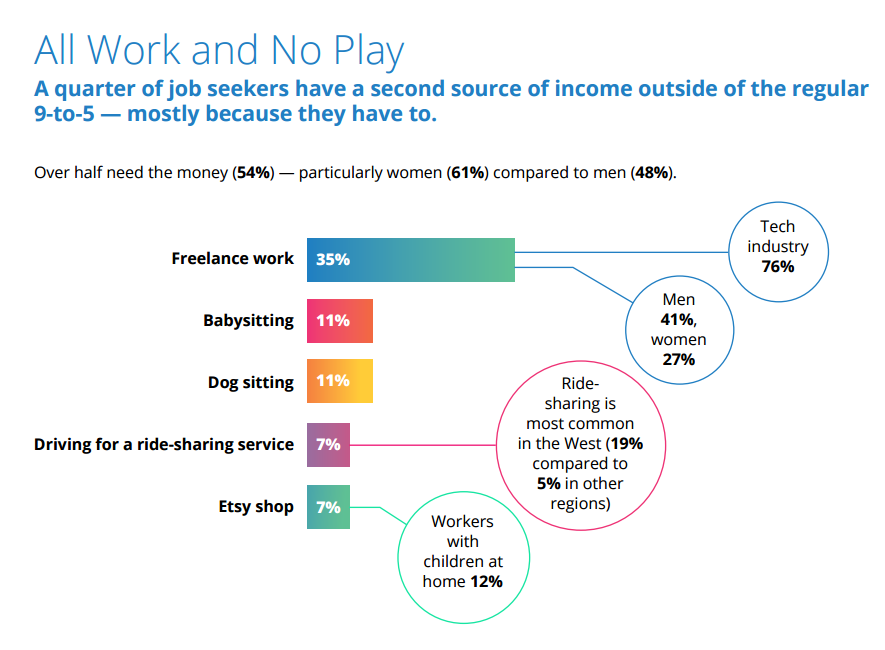
The picture above posted by CNBC, for one shows that only ONE-FOURTH job seekers have a second source of income! Many people expect to gain wealth by moving up the work chain and receiving a higher income, but according to Jim Wang of WalletHack “On average millionaires have seven sources of income.” But the education system today is teaching us and developing students to find a field or subject they excel in and pursue a career. Other forms of income, the most popular way of income being passive include investing money into stocks, real estate, mutual funds, retirement plans, and most of this requires saving money. School main goal is to give you skills to help with college and college only helps with getting a certain degree, so does that make it parents jobs to teach all life lessons, and the financial part of life?

Just imagine a world where everyone has basic financial knowledge and life skills, now of course other things would be applicable such as communication and dealing with real life problems. SImply being able to understand the importance of having a steady income and possibly even more than one only make life easier. According to Stephen Guise author of Mini Habits, “In 2011, 1.5 million, or 53.6% of college grads under age 25 were out of work or underemployed.” Obviously some may say this is because everybody is waiting for the perfect job or look for higher pay, when it’s more likely that many of these kids aren’t as privileged to be financially ready for the real world.

Other benefits of teaching the importance of the financial side of life with help improve poverty. Poverty being seen as an unsolvable problem, which leads to giving away taxpayer dollars which could be contributed to other programs such as education. Today their is around 1.06 trillion dollars towards welfare now of course there are many other parts to welfare but a major one is poverty. Focusing on incorporating new classes and focusing on the real world with the financial aspect is a must we need in our future education system.


Additional links

https://stephenguise.com/how-school-trains-us-to-fail-in-the-real-world/

https://thebestschools.org/magazine/15-subjects-mandatory-arent/

https://medium.com/s/story/how-american-schools-educate-us-to-fail-3c2d99adfe00

https://www.cnbc.com/2017/05/30/most-employees-are-missing-out-on-one-way-to-get-rich.html

Related Posts Plugin for WordPress, Blogger...