Thursday, October 10, 2019

Saving for Retirement

Saving for Retirement

By Haley Kaiser


If I had to ask anyone from Gen-Z what they are most stressed about, chances are it is about money.

Money is what makes the world go round and what helps us live our lives. Although, most of the time

 financial stress doesn’t stem from what you spend your money on. It’s more so how to save your

money. Generation Z is looking for tips on how to save for retirement, so I’m here to give you all

some tips on how to save correctly. 

The overarching question is, when should you

start saving? Ideally, you should start saving as

soon as possible. Although, many start in their

20s, because this is when they get their first job

and paychecks start rolling in. Saving at a

young age allows your money to generate its

 gains through the interest you earn on savings.

Right now the interest rate on savings accounts is around 2.14% but is expected to grow to 2.41% in

2021 (Wall Street Journal).
The next question is, how much should I save? Many financial planners recommend that you start by

 saving 15%-20% of your income. Although, this is your retirement fund so you should use an online 

calculator to help figure out how much you should save based on how much you make (this is so the

numbers are specifically tailored to you and not a general amount). When looking at how much to

save you should take into account the current and forecasted inflation rates. As inflation rates

increase, prices of future goods and services will increase, thus altering how much you will spend on

necessities. Currently, the inflation rate is “1.8%, as published September 12, 2019, by the U.S. Labor

Department” (US Inflation Calculator). It is forecasted to be 2.24% by 2024.

The last question is, what if I can’t save enough? Your main goal then is to try to automatically move

 a chunk of your paycheck to your savings. This way you don’t have to budget for retirement because

you are already paying yourself first. Now, if you don’t want to divert some of your paychecks to

your savings, you should start thinking of creating a budget. You are then able to reflect on your past

spending and find new ways to cut down on unnecessary spending. Fuhrer increasing money sent to

your retirement fund.


Works Cited
“Current US Inflation Rates: 2009-2019.” US Inflation Calculator, 12 Sept. 2019,

www.usinflationcalculator.com/inflation/current-inflation-rates/.

The answer is simple: as soon as you can. Ideally. “When Should I Start Saving for Retirement?”

 CNNMoney, Cable News Network,

money.cnn.com/retirement/guide/basics_basics.moneymag/index.htm.

“U.S. - Projected Inflation Rate 2008-2024.” Statista, www.statista.com/statistics/244983/projected-

inflation-rate-in-the-united-states/.

The Importance of Managing Money

The Importance of Managing Money
Samantha Gillis
Economics B2

In the adult world, managing money is a very important factor to life. By managing your money, it’s easier not to fall into deep debt, or worse. Methods of regulating money are important for your personal savings, businesses, and more. It's essential to understand the importance of your expenses, income, and investments for a productive, successful life.

(https://www.nber.org/papers/w22066)

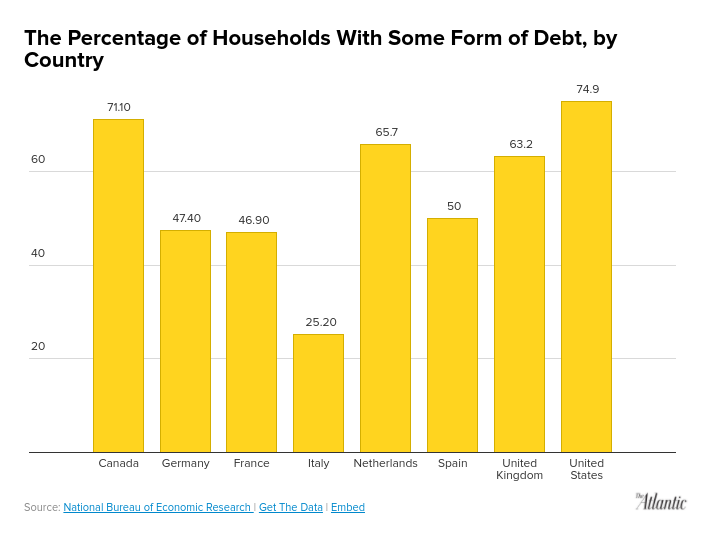
Americans do a poor job of regulating their finances compared to other developed countries. According to theatlantic.com, households in The United States have the highest percentage (74.9%) out of 8 major countries with some form of debt. Economists say “international variations in banking regulations and mortgage taxation” take part in many of Americans' debts. Along with that, other economists argue that cultural beliefs play a part as well. Unfortunately, the U.S also struggles with credit-card debt as well. Compared to countries like Canada and the U.K., their credit-card debt rates are a lot lower than the U.S. Almost 40% of American households have credit-card debt, while countries like Italy and Spain have percentages in the single digits. You can clearly see the issue with Americans and their money-spending techniques. Many can benefit by regulating the way we use our money.


(https://www.mymoneycoach.ca/budgeting/what-is-a-budget-planning-forecasting)


Budgeting is crucial for your financial success because it ensures that you will always have enough money for the things you need. According to a recent study from ValuePenguin, the median credit card debt reached $2,300 per household in June 2019. Budgeting is when you balance your expenses with the income you have. It’s important to budget your money so  you don't overspend with money that you don't have. By not budgeting, it’s easier to fall into debt. It’s especially hard to realize how much you’re spending if you use a credit card. Regardless, budgeting your money will help you in the future.

While owning a small or big business, managing your money at work is very important as well. If money isn’t managed well at work, the business will fail.  According to finder.com, simple steps like properly managing your accounting, not spending prematurely, making financial projections and more are easy ways to manage money while owning a small or large business. It's important that you keep track of income and costs. This is why not spending prematurely is crucial. Spending more than you have at the moment will create more financial issues. Besides that, it is also important for you to plan ahead. Anticipating future obstacles will allow you to handle them better. Businesses are a huge part of the economy and it is important that businesses are managing their money well otherwise they will not be successful to the economy.

In conclusion, money is the main reason why the world works the way it does. Managing money allows better financial security, less stress/conflict, and advantages for opportunities. It’s important that we all manage our money as individuals or possible business owners because, overall, it contributes to our economy. 


Works Cited
“10 Essential Steps To Manage Your Money The Right Way.” MoneyStrands, 31 Jan. 2019, moneystrands.com/10-steps-manage-money-right-way/.

Bell, Amy. “6 Reasons Why You Need a Budget.” Investopedia, Investopedia, 19 July 2019, www.investopedia.com/financial-edge/1109/6-reasons-why-you-need-a-budget.aspx.
Camp, Aliyyah. “17 Tips to Manage Your Small Business Finances.” Finder, 15 Apr. 2019,
www.finder.com/small-business-finance-tips.

Hill, Brian. “Importance of Money Management.” Budgeting Money, 26 Jan. 2019, budgeting.thenest.com/importance-money-management-3204.html.

Pinsker, Joe. “Are Americans Any Worse With Money Than the Rest of the Developed World?” The Atlantic, Atlantic Media Company, 14 Mar. 2016, www.theatlantic.com/business/archive/2016/03/americans-shortsighted-in-debt-and-bad-at-investing/472680/.

“What Is Budgeting? What Is a Budget?” What Is Budgeting and Why Is It Important? | My Money Coach, www.mymoneycoach.ca/budgeting/what-is-a-budget-planning-forecasting.

The Difference in Costs Between Purebred and Labradoodles

The difference in costs between purebred and labradoodles.
Abby Smith

A labradoodle is pretty much how it sounds: A crossbreed between a Labrador Retriever and standard poodle. The first labradoodle was created in 1988 in Australia by mixing the two breeds together. The unique combination of the breed was to create a dog that would not shed, due to some people being allergic to dog’s fur, and also a smart and sociable dog.  Labradoodles are known for their  appearance, intelligence, and hypoallergenic tendencies.
These dogs come in all sizes including: miniature, medium, or standard size. The dog can reach a height of 14 to 24 inches tall, and weigh from 25 to 65 pounds. Labradoodles also have different types of fur that they can be covered in; some being curly, fleece like, soft, and wavy. The fur can be yellow, gold, red, black, brown, or brindle.
Image result for labradoodle
Depending on the type of dog and where you bought your purebred, the average cost should be somewhere around $1000.  If the breed is very common, the breeder can command higher prices. If the breed is in demand, and the breeders are getting constant calls about the dog, the prices will rise. One common dog breed is a lab. The purebred labs average cost can be anywhere from $300 to $1,000. Another common breed alongside the lab is a poodle. The average cost for a purebred poodle should be around $1,000. When these two purebred dogs come together as a mother and father they produce a labradoodle.
Image result for poodleThe average price for a labradoodle is more expensive considering the average pricing of its parents . This dog breed should be somewhere between $2,500 to $3,000. This is the price twice as much of either of its parents. Due to the cost of the labradoodle the profit is benefiting the economy because the rise of popularity in the dog breed. The breeder plays a large role in the pricing because of the quality of dog that you will get. They match the two breeds together to breed a puppy with a certain trait and temperament. The breeder is also the primary caregiver for the first 8-10 weeks of the puppies life. Another reason to why the pricing is high is because of their personalities. The easy going nature and love for the outdoors that labs acquired, and the intelligence and easy trainable traits that poodles have, are great characteristics to have in a dog, which is what makes labradoodles so popular and a great family pet.
Image result for puppies labradoodles
Although the pricing for labradoodles is much higher than a purebred dog, I think they should continue to be where they are at. If the price of the labradoodle is lower, that could be an indication that it came from a breeder who hasn't breed the dog properly or is inexperienced. An inecpderened dog breeder could procuce a dog that has unethical behaviors and/ or dubious financial goals. The price of the dog will ensure that you are receiving a puppy that is healthy and well nourished and has the characteristics of the best traits between the lab and poodle.


Works Cited
"Labradoodle Facts." Math. N.p., n.d. Web. 08 Oct. 2019.

Guthrie, Madison, and Lesley Bernstone. "Labradoodle Cost - What Will Your Puppy's Price Tag Be?" The Happy Puppy Site. N.p., 14 Mar. 2019. Web. 08 Oct. 2019.

David. "How Much Should A Purebred Dog Cost." Pet Yak. N.p., 07 May 2015. Web. 08 Oct. 2019.
"Would You Spend $2,500 on a Puppy? | CBC News." CBCnews. CBC/Radio Canada, 02 Apr. 2015. Web. 08 Oct. 2019.

Ullah, Khalil. "Overbreeding Dogs - Definition, Risks & Disambiguation." Breeding Business. N.p., 05 Apr. 2019. Web. 08 Oct. 2019.

Lthq. "Labrador Breeders – How to Find The Good Ones!" LabradorTrainingHQ. N.p., 06 Feb. 2019. Web. 08 Oct. 2019.


The Economic Impact of Veganism on Dairy Farmers

The Economic Impact of Veganism on Dairy farmers
Claire Mistele

The United States has been known for its Got Milk campaign encouraging kids and all consumers to drink more milk. However, this campaign has been challenged by the growing societal trend of veganism. Many substitutes for milk and dairy are being produced to fill these needs by society.  “United States still produces over 200 billion pounds of milk every year.” (Erica Sanon). Dairy, especially milk is a very important product in the United States. In the past there has been a very consistent demand for milk. However, the economic impact on dairy farmers (who are now losing money) is detrimental. This blog post will talk about how this economic trend, which has been affected, and even raised suicide rates in dairy farmers.

In case you weren't aware of what veganism is, it is a diet in which participants cannot consume any dairy or meat products (anything that comes from an animal). Vegan Bits states that, “[Currently] only half of one percent of the United States population — or 1.62 million— is vegan.” Although this makes up a small percent of the US, it is substantial because it’s a large amount of people and is growing rapidly. Veganism directly competes with agricultural farmers, dairy farmers, and even consumers. Currently in the United States “The value of U.S. livestock production output (dairy products, milk; meat animals; miscellaneous livestock; and poultry and eggs) contributed $167.4 billion of this sum, about 1.0% of GDP” (Lee Shultz). Although these numbers may seem small, once again they make up a big part of the United States economy as they bring in money from the consumers back to the government and the farmers themselves. This money is necessary as the farmers need to be financially supported. Also this money is used by the government in subsidies that may also go back to the farmers. By trying to make the change away from all non vegan foods so suddenly could cause economic instability.


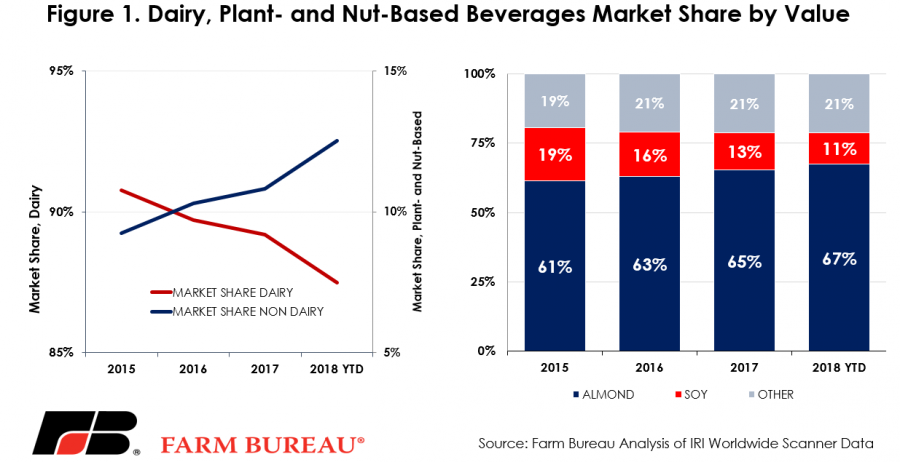
The graphs above illustrate the shift from animal-product based food to plant-based food. Over three years the sales (of vegan food) have increased significantly with a growth rate of around 10-20% each year. This is because non-animal based products are gaining traction, and are being demanded due to these products being marketed as a healthier lifestyle, saving the environment, and movement away from livestock abuse. This increase can be hypothesized to continue to increase at a substantial rate over the next 5-10 years. As plant-based milk skyrockets, regular milk drops significantly as the interest for milk shifts to other substitutes.

Farmers don’t make a lot of money; they typically make about $10-$18 dollars per 100 pounds of milk they produce and sell. However, although it would seem like no one wants to go into this profession, according to the economic department at Iowa State University, “ In 2012, 16.5 million full and part-time jobs were related to agriculture, about 9.2% of total U.S. employment.” Due to the number of people switching over to a vegan diet, this results many budget cuts by these milk or animal based producing companies. This includes laying people off (approximately 11 million farm jobs have been lost recently).

As mentioned earlier, the suicid rates of dairy farmers has increased over the years, The Badger Harold states, “The increase in suicides among dairy farmers can be seen as a byproduct of several economic hardships in the state, many of which stem from the low milk prices. Farmers aren’t getting a fair price for what they produce, The milk prices are the worst they’ve been in ten years”. Dairy farmers have one of the highest suicide rates records from all occupations. Something needs to be done to help regulate the changing dairy and meat market, as well as, something needs to be done to stop suicide attempts due to economic instability.


Works Cited
Admin. “Beyond Meat Is Just the Beginning - Dairy Alternative Firms Are Set to Boom to a $38 Billion Market.” Food Next.Africa, 6 Aug. 2019, www.foodnextlive.com/news-articles/beyond-meat-is-just-the-beginning-dairy-alternative-firms-are-set-to-boom-to-a-38-billion-market/.

Baker, Ben. “Economic Hardships Lead to Skyrocketing Suicide Rates among Wisconsin Farmers.” The Badger Herald, 26 Feb. 2019, badgerherald.com/news/2019/02/26/economic-hardships-lead-to-skyrocketing-suicide-rates-among-wisconsin-farmers/.

Johnson, Marie. “The Land of Milk and Money: Dairy Farmers Cope with Chronically...” Agweek, 5 July 2018, www.agweek.com/business/agriculture/4468598-land-milk-and-money-dairy-farmers-cope-chronically-low-milk-prices.

Kuper, Arthur, et al. “Vegan Demographics: How Many In The US & In The World?” Vegan Bits, 3 Oct. 2019, veganbits.com/vegan-demographics-2017/.

Liz. “The Dairy Case Is More Competitive Than Ever.” American Farm Bureau Federation - The Voice of Agriculture, 29 Aug. 2018, www.fb.org/market-intel/the-dairy-case-is-more-competitive-than-ever.

Professor, Lee SchulzAssociate. “Would a Sudden Loss of the Meat and Dairy Industry, and All the Ripple Effects, Destroy the Economy?” Would a Sudden Loss of the Meat and Dairy Industry, and All the Ripple Effects, Destroy the Economy? | Department of Economics, www.econ.iastate.edu/node/691.

“Scholarship @ Claremont.” Site, scholarship.claremont.edu/.

Tuesday, October 8, 2019

Scandal Almost Causes Death and Destruction to Company

Scandal Almost Causes Death and Destruction to Company
Written by: Izaak Zabel 

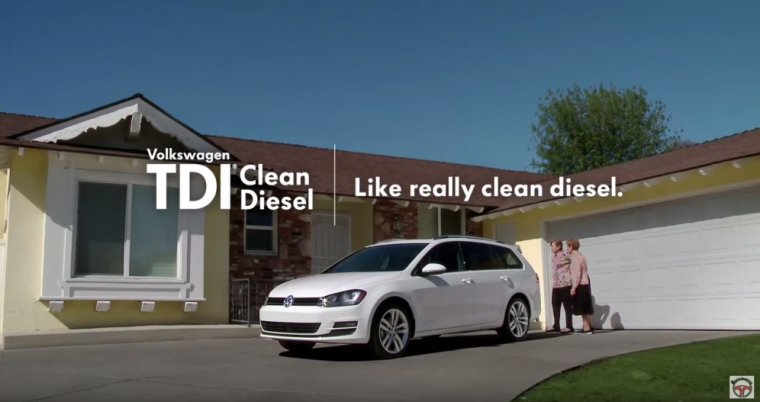
Over the past few years, Volkswagen, a German car company, has been recognized for more than its accomplishments. Only recently did that recognition hit the consumer's idea of the cars they have known and loved. The 2018-2019 models of the Volkswagen Golf and Jetta with the TDI motor has US Environmental Authorities shaking their heads. The 2009 jetta won “Green Car of the Year”. For those people that want a sporty, functional yet fuel efficient car don’t look towards a Toyota Prius, however, a Volkswagen diesel engine.

The term “TDI” is a turbo-diesel vehicle that gets upwards of 40-50 mpg on average. Once they hit the market, over 500,000 were sold in the US alone in about 14 months. Other competitors are now itching to start adding turbo production to cars, squeeze every drop of gas out of their engines. As nice as these cars are for fuel efficiency, they aren’t for the air. The VW  manufacturer had cheated the system.

Every 3-4 years or so, every licensed car must be “emission tested.” The purpose is to prevent any vehicles from polluting the air with too rich fuel. An O2 sensor checks the amount of exhaust coming from the system in two places, to tell the computer to use less or more fuel. Volkswagen completely failed at their job to follow those guidelines. The investigators discovered that the Passat and Jetta models spewed 30 times the allowable level of nitrogen oxide. German automakers passed this by adding to the cars computer an “emissions mode.” “It is to be assumed that the authorities will subsequently examine VW systems to determine if Volkswagen has installed test recognition into the engine control software (a so-called defeat device).” says the director of the Environmental Authorities.

This incident almost caused the diesel branch of VW to declare bankruptcy . Every owner of these cars were making a financial decision whether or not to keep the car or sell it back to the dealership for almost half of what they had paid for the car. The value of these cars significantly dropped to an all-time VW low.

As I am a Volkswagen enthusiast, I am fairly biased to the situation. I would say whether I believed in the company or not, the best choice for that situation would be to hold on to your VW. Over half a million Sedans, SUVs, and crossovers from VW were apart of this scandal and will be recalled, including a $25 billion fine towards VW for allowing this to happen. VW stock will plummet and this will cause the majority of people to cash out and sell their car back to the dealership. But this would be the best time to buy a stylish and fuel efficient car as an investment.


Works Cited
BerkeleyJr. “Volkswagen to Recall 83,000 Vehicles to Settle Allegations of Cheating Emissions Tests.” CNBC, CNBC, 20 Dec. 2016, www.cnbc.com/2016/12/20/volkswagen-strikes-deal-to-address-80000-polluting-diesel-vehicles-judge-says.html.

Hotten, Russell. “Volkswagen: The Scandal Explained.” BBC News, BBC, 10 Dec. 2015, www.bbc.com/news/business-34324772.

Parloff, Roger. “How VW Paid $25 Billion for Dieselgate - and Got Off Easy.” Fortune, Fortune, 6 Feb. 2018, fortune.com/2018/02/06/volkswagen-vw-emissions-scandal-penalties/.

The Value of Time

The Value of Time
Krista Paras

Time + compound interest = lots of money. Benjamin Franklin understood this concept all the way back in the 1700s. In his will, Benjamin left a little around $5,000 dollars for Boston, and another $5,000 for Philadelphia. However, this money came with a catch; In order to show the time value of money, Benjamin said that the cities weren’t allowed to use this money for a hundred years, and after this, they had to leave 25% of what they had for another 100 years. From 1790 to 1890, the sums of money grew to $400,000 and $100,000 (the cities used different investment strategies). From here, the cities saved 25% of what they had saved for another 100 years. By 1990, the sums had grown exponentially. The leftover $100,000 and $25,000 became $4,500,000 and $2,000,000 in the span of 100 years. As you can see from this story, having some patience when it comes to money can really pay off. For another example, we can look at the image to the image to the right, (which might look familiar because it was in the first article we read this year) it shows how much of a difference starting early for retirement savings makes. You can see by investing $250 a month starting at 25 you’ll end up with $878,570, but at when starting at age 45, you only save $148,236. This is a $730,334 difference! According to Synchrony Bank, “ [The] ‘rule of thumb’ given by some financial experts on how much individuals should be saving for a goal of retiring by age 67:

Americans in their 30s: 1–2 times their annual salary
Americans in their 40s: 3–4 times their annual salary
Americans in their 50s: 6–7 times their annual salary
Americans in their 60s: 8–10 times their annual salary”

According to this quote, because the median US salary is about $45,000, by the time we retire, we should have at least $360,000 to $450,000. However, by retirement age, the median person only has about $170,000 saved, which isn't nearly enough! All in all, it is important to start saving money early on, so due to compound interest, we can end up with hundreds of thousands of dollars saved for retirement.


Works Cited
Frankel, Matthew, and Cfp. “The Average American Has This Much Saved for Retirement -- How Do You Compare?” The Motley Fool, The Motley Fool, 21 Mar. 2016, www.fool.com/retirement/general/2016/03/21/the-average-american-has-this-much-saved-for-retir.aspx.

“Investing in the Future, 200 Years in the Past.” The New York Times, The New York Times, 10 Sept. 2015, www.nytimes.com/paidpost/franklin-templeton/investing-in-the-future-200-years-in-the-past.html.

Lieber, Ron. “A Financial Checklist for Your Newly Minted High School Graduate.” The New York Times, The New York Times, 31 May 2019, www.nytimes.com/2019/05/31/your-money/teenager-financial-preparation.html.

“What's the Median Retirement Savings by Age?” Synchrony Bank, Synchrony Bank, 25 Sept. 2019,
https://www.synchronybank.com/blog/median-retirement-savings-by-age/

Monday, October 7, 2019

Invest to Live Your Best

Invest to Live Your Best
By: Nedda Besharat

Investing is not so easy! When you hear the word investing what comes to mind? I immediately think of stock markets and bonds and complicated graphs that explain business trends… That sounds very complicated if you ask me. But thankfully, there is a much easier way for teenagers to start investing early: with an IRA. IRA stands for “Individual Retirement Account” and it allows one to save money for retirement (hence the name). However, there are two IRAs: a Roth IRA and a Traditional IRA. Traditional IRAs and Roth IRAs have significant differences which ultimately concludes to one being better than the other. Through examining the advantages and disadvantages of each account, you will find out there is a clear winner.

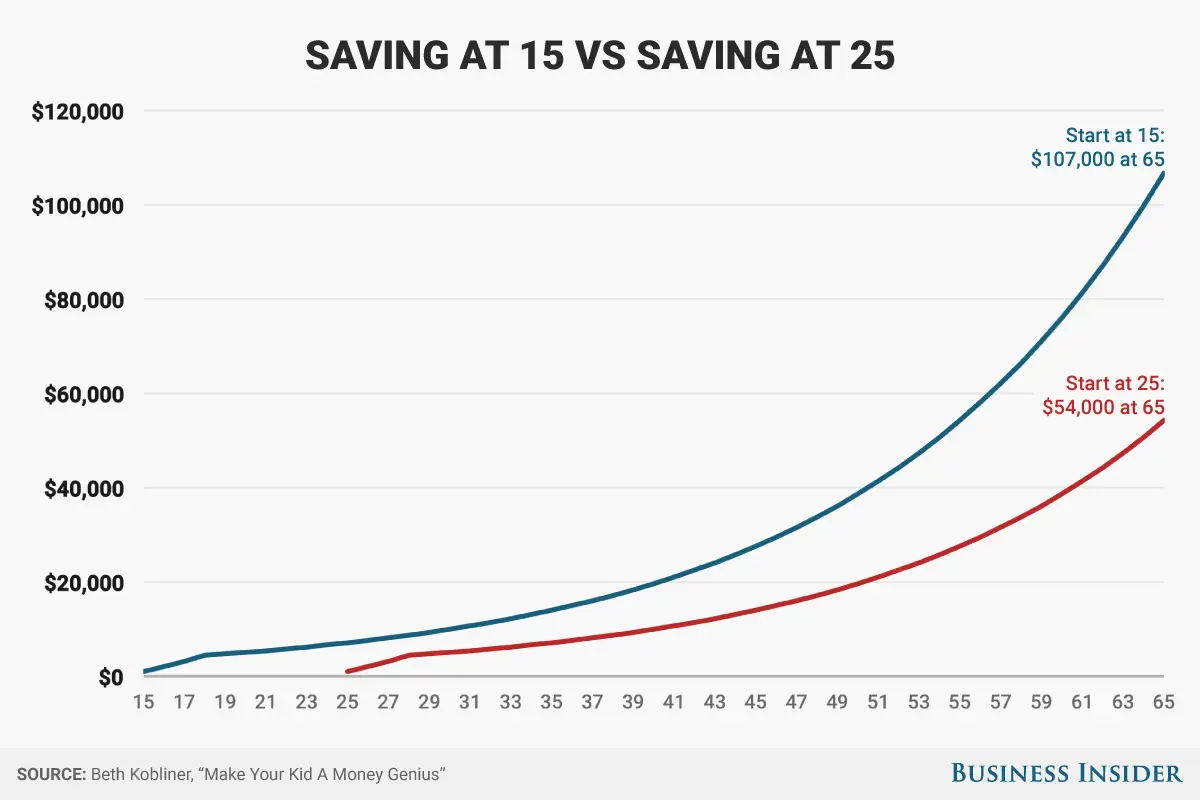
It seems like such an early time to begin investing, however, the earlier we start growing our money, the more money we will make! According to Business Insider, your investment total will double in your future if you invest in a Roth IRA account as a teenager. To qualify for a Roth IRA account, your income has to be less than or equal to $117,000 a year. As high school students, making $117,000 is significantly out of our range. Now that you qualify, you are able to keep your money in a Roth IRA for as long as you desire which makes it easier to pass money down to your heir and/or continue to grow your money (NerdWallet). On the other hand, Traditional IRAs require one to remove their money at no later age than 70 ½ years. Clearly, Roth IRAs allow for more flexibility than Traditional IRAs, which is a notable advantage.

A key difference between a Roth IRA and a Traditional IRA is that, “With a Roth IRA, you don’t get an upfront tax break like you do with a traditional IRA. Instead, your contributions and earnings grow tax-free forever” (Investopedia). Although at first consideration, a Traditional IRA might be better because of the annual tax-returns, you will most likely be spending your tax returns on unnecessary “wants.” The Roth IRA positively forces you to leave your tax earnings for when you really need it to support yourself: after retirement. According to NerdWallet, “...you will eventually have to face that tax burden in retirement, which means unless you really need that upfront tax break, it’s hard to go wrong with a Roth IRA.” Meaning, a Roth IRA is beneficial no matter how and when you use it since you can simply let your money grow without interfering. Being a full-time high school student with all of our extracurriculars barely gives us enough time to sleep at night. That is why it might not be the best idea to make investments in the stock market at such a young age as it is very time consuming. Instead, investing in a Roth IRA will allow you to grow your money for your future to give you the opportunity to live your best, worry-free life.

If you would like to learn more about Roth IRAs, please feel free to watch this video.


Works Cited
Daugherty, Greg. “Can Teenagers Invest in Roth IRAs?” Investopedia, Investopedia, 30 Sept. 2019, www.investopedia.com/can-teenagers-invest-in-roth-iras-4770663.

Dayana, and Forbes. “Roth vs Traditional IRA: Which Is Right For You? - Nerdwallet.” NerdWallet, NerdWallet, 23 Aug. 2019, www.nerdwallet.com/article/investing/roth-or-traditional-ira-account.

Loudenback, Tanza. “This Chart Should Convince Every Teen to Start Saving for Retirement.” Business Insider, Business Insider, 21 June 2018, www.businessinsider.com/why-teens-should-be-saving-money-roth-ira-2017-3.

Managers, Jazz Wealth. “Roth IRA Explained | A Simple Explanation of the Roth IRA.” YouTube, YouTube, 27 Mar. 2017, www.youtube.com/watch?v=-PQc42Rfw0A.

Related Posts Plugin for WordPress, Blogger...