Thursday, May 5, 2016

World Cup: More than Just Entertainment

World Cup More than Just Entertainment

Matt Gahan

Mr. Reuter

Economics

3 May, 2016

All around the world people enjoy the game of soccer and the world cup is just one example of how much people enjoy it.  According to the final figures from FIFA and Kantar media, the 2014 world cup in Brazil reached an estimated 3.2 billions viewers over the span of the entire world cup.  It was also said that one billion viewers alone were accounted for watching the final game on either their phones, televisions, computers or at the stadium, Estádio do Maracanã.  Considering these numbers it’s no wonder why countries are so captivated to host this major event in order to gain the economic benefits from the consumers that come with it.  
The first benefit that comes from this massive venue is that the swarm of people coming into the country to experience this once in a lifetime opportunity forces change on the infrastructure in a good way by increasing airport size, hotel size, improvement of quality of stadiums, more efficient transportation systems, etc due to the rising demand that comes with it.  It also accelerates projects because the people in charge of them want to be able to profit from the venue so they prioritize the completion of them.  After the world cup is finished the country still gains an increase of tourist attraction and this creates jobs and drives down the unemployment rate.  A report predicted 3.2 millions jobs have been created after this in civil construction, fast food, entertainment, business services and so on.
Another benefit from hosting this revenue is the increase of global trade used, in turn increasing that country's GDP not only in the span of the world cup but over years after.  As seen in the picture below of every country that’s hosted the world cup from 1954-2006 combined the GDP grows by almost an entire percent the two years after it’s hosted!  Since soccer is a multi-internationally watched sport corporations from all around the world want to try to get in and profit from the event.  This gives the Brazilian businessmen an opportunity to make international ties, which brings more knowledge and consumption to their economy.
In summary hosting the world cup is a very big deal for many countries and the underlying benefits that most people don’t realize are happening are actually affecting the economy of that country in so many ways which is another reason why the world cup is such a big deal beyond entertainment.

Works Cited
"Word Cup Benefits." FIFA International. N.p., n.d. Web.
"2014 FIFA World Cup™ Reached 3.2 Billion Viewers, One Billion Watched Final." FIFA.com. N.p., 16 Dec. 2015. Web. 03 May 2016.

"World Cup Economy." Wikipedia.org. N.p., n.d. Web. 03 May 2016.

NBA Playoffs

John Carle
Mr.Reuter
Economics
5/2/2016

Nba Playoffs


The Nba playoffs are in force right now, with the first round coming to end and the second one starting. The playoffs are both great for the Nba team and the state that the team is from. There are many factors that come into play with the nba playoffs and economics. First is how often the team gets to the playoffs, second is the fan base of the team, and lastly who is the other team they play.
A big factor with the playoffs is how often the team gets to the playoff for example the Golden State Warriors are a very good team and they had a high chance of making in farther into the playoff which generates a ton more revenue for that team. For the 16 teams that make it into the playoff the team is giving $194,000  no matter if they win a game or lose a game. That is not counting all the tickets and merchandise that is sold during the playoffs. Therefore being a better team and making it farther into the playoff you have a huge trade off of a lot more money. The winning team is award 2.3 millions dollars from the NBA, the runner ups are award 1.5 million dollars.
Second factor is the fan base of team or their customers. The bigger name team the better the team is going to do with selling tickets. For a example a team like Cleveland or Goldenstate are going to have a much easier time selling tickets because they are good teams and they also have a huge fan base. Compare to a team like Detroit Pistons who do not have a large fan base. Due to a larger fan base teams are able to raise there prices of the tickets because the fans are willing to pay for them. The average nba ticket is about $177 during the regular season but if the team makes it into the conference finals that raise to $717 per ticket. So the teams that have a large fan base are going to have huge profit compare to a team that going to have to sell their tickets for less because they don't have as a large fan base.


The third factor that play a factor in the NBA playoffs is who the team is playing. This mostly comes into play for a smaller team that don't have as money as superstar players on it.  This would be like a teams that are lower seeds in the playoffs, like a 1 seed playing a 8 seed. For teams that are lower seed they still have a great trade off if it means they are going to lose in a couple games. For an example during the regular season when the Golden States Warriors traveled the tickets of the home team tickets were 10 times higher compared to a small team. This is during the regular image what teams do when it's the playoffs.
Lastly this means that the playoff are a huge economic buster for the NBA, the team and the city. There is a lot of money that is spent during the NBA playoffs, from making it into the playoffs to how big the fanbase is and who all wants to go games and is willing to spend that money, and lastly the superstars you get to watch. The playoffs are great for everyone that gets to experience them.

Work Cited
"BALLnROLL - By The Numbers: The Economics Of The NBA Finals."BALLnROLL - By The    Numbers: The Economics Of The NBA Finals. N.p., n.d. Web. 03 May 2016.
"NBA Playoffs Bracket." NBA Playoffs Bracket. N.p., 25 Apr. 2016. Web. 03 May 2016.
"NBA Playoff Tickets: Avg Prices By Team." Tipiq. N.p., 20 Apr. 2015. Web. 03 May 2016.

Monday, May 2, 2016

Spring is Here - Minha Beg

Minha Beg
Mrs. Straub
AP Econ
1 May 2016

Spring is Here!
As the snow starts to melt, people are pulling out their sunglasses and flip flops to enjoy the warm weather that we all have been waiting for. But as the weather improves, what exactly does that mean for the employment rate in the U.S? Are people more interested in getting a job or just soaking in the sun? According to ABC News, people want go out and make money so they can spend it on other activities during the summertime. This bodes well for the US economy, because the economy benefits as more money changes hands. This means that with more people employed, people are able to spend more due to an increase in their disposable income.
Currently, our economy is still not at its peak. June 2014, marked the 5 year anniversary of the end of the Great Recession and our economy is only between one-third to half of what it used to be before the recession hit. Since the economy just got of this severe recession in June 2009, 11 million jobs were needed to bring back the unemployment rate (Johnson). Linked here  is video that explains a bit more about how our economy was after the Great Recession.
Today were are in a much better spot, but still need to continue recovering to get back to the potential output. There are many businesses that have seasonal workers, so their labor demand increases during the warmer seasons. For example, Home Depot and Wal-Mart for their garden department, Six Flags, and Hershey Park. According to ABC News, in 2011 there were over 100,000 season jobs that were open. With Home Depot having 60,000 seasonal hires openings and Lowe’s having 50,000 hires. With all of these new seasonal hires, it is a good sign for the economy because with more employment, there will be a more robust economy. This allows for there to be stability in the economy because the economy is showing signs of growth and recovery. All of this leads to an increase in consumer spending and confidence, because they believe that their jobs are secure and they can spend a bit more than they did when the economy was shaky and going through the recession. All of these positive signs will feed forward and allow the economy to grow at a steady rate, increasing the U.S GDP overall and allowing us to recover from the recession that ended in 2009.


In the picture above, you can see ever since the Great Recession ended the unemployment rate has gradually been decreasing which is a good sign. As of 2015, the unemployment rate was at 5%, which the ideal rate so we are currently in a good position for unemployment; which will hopefully stay that way as more people get employed during these warmer months.


Works Cited
Fieldhouse, Andrew. "5 Years After the Great Recession, Our Economy Still Far from Recovered." The Huffington Post. TheHuffingtonPost, n.d. Web. 29 Apr. 2016.
Johnson, Tory, and Workplace Contributor. "Spring Fling: Season Brings Tens of Thousands of Temporary Jobs." ABC News. ABC News Network, 21 Feb. 2011. Web. 29 Apr. 2016.
TYTshows. "Is It Worse Now Than During The Great Recession?!" YouTube. YouTube, 23 Aug. 2013. Web. 29 Apr. 2016.

"Unemployment in the United States." Wikipedia. Wikimedia Foundation, 4 Mar. 2016. Web. 29 Apr. 2016.

Thursday, April 28, 2016

To Speed or Not to Speed

Alex Miller
Mr. Reuter
Economics
26 April, 2016
To Speed or not to Speed
There has long been debate over the speed limits throughout the U.S. ever since the oil shortages in the 70s. The action by the government was to reduce speed limits to 55 mph. This action helped to reduce the United States dependency on foreign oils and to help the environment.
Speed limits should be reduced again to 55 mph from 70 mph, not only to reduce dependency and save the environment but also to save lives and everyone money. The current speed limits in Wisconsin on major interstates is 70 mph and then 65 mph on state highways. This being said, no one ever really goes that slow, most travel about 75-80 mph. Everyone who does travel this fast is wasting money and gasoline. There is only one advantage to going this fast and that is to save time. What most miss out on or else completely neglect is the chance to maximize efficiency and save money. Here’s an example of how travelling the optimal speed can save you money, Let's take two hypothetical drivers, Bill and Bob. They need to go 60 freeway miles from City A to City B. Both cars get 30 miles per gallon if the driver stayed at 55 mph, the posted speed limit. Bill travels at 55, but Bob speeds and does 75 mph - wanting to get there sooner. At 75 mph, it would take Bob about 48 minutes to reach the destination. At 55 mph, it takes Bill about 65 minutes to reach the destination. At 55 mph, Bill used 2 gallons of gasoline. At $2.80/gallon, that's $5.60 to drive the distance. At 75 mph, Bob would use 2.5 gallons of gasoline. At $2.80/gallon, that would be $7.00 to go the same distance (“Speeding”). If Bill travels this distance to work everyday during the week he will save $14.00 a week. The only thing he would lose is a small amount of sleep. The trade-off between the private costs (fuel cost and damage and injury) and private benefits (time savings) is very large. There are also many external costs that come into play such as injury to others, health impacts and pollution. The costs far outweigh the benefits. All you gain is time, why gain time when you can gain money and ensure that you will be more safe.
Safety plays a very large factor in why speed limits should be reduced once again. The U.S. government reduced the speed limit to 55 mph in the 70s and 80s to help reduce fatalities in car crashes. Now that law is gone and speeds are higher than they have ever been. People on highways and interstates speed excessively, and it is becoming a major problem. In fact, “Speeding is a factor in 31 percent of all fatal crashes, killing an average of 1,000 Americans every month, according to the National Highway Traffic Safety Administration (NHTSA)” (“Speeding”). This means massive amounts of accidents must occur, and the cleaning up and repairing of both people and vehicles has a cost. It is probably a lot more than you may think, “The NHTSA estimates the cost to society of speed-related crashes to be more than $40 billion each year” (“Speeding”). In this Illustration it is seen that as the speed of vehicles is increased along the x-axis, the number of crashes that occur increases as shown by the points along the graph. Along the y-axis it can be seen that as speed increases and the number of crashes occurring increases the percent killed in the accidents increases as well.
Image3.gif
All the benefits that come with reducing the speed limits are great for the economy and will help improve the standard of living here in the United States. If trucking and airline companies aren’t afraid to slow down, we shouldn’t be either. It will save everyone money, so everyone should try to change the lead in their right foot into gold in their pocket.

Works Cited
Castleman, Tim. "55 MPH Speed Limit Makes Economic, Political, and Environmental Sense." USA News. USA News, 27 July 2009. Web. 25 Apr. 2016.
"Speeding and Your Vehicle's Mileage." Speeding and Your Vehicle's Mileage. California Energy Commission, n.d. Web. 25 Apr. 2016.

Summerfest is Arriving

Kristie Tabbert
Mr.Reuter
Economics B2
24 April 2016

Summerfest is Arriving
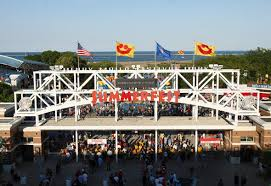
Summerfest is one of the biggest music festivals in the United States. While 65 days to opening day seems to be too long to wait for, people of all ages are eagerly buying their concert tickets and power passes. People from all around the country and unified by one thing they have in common, music. Milwaukee’s tourism rates constantly increase each year as Summerfest becomes more popular.  One year “Summerfest officials said anywhere from 5,000 to 7,000 people were let in without tickets. Estimates were as high as 117,000 people that night at the festival” (Walker). Admission estimates will most likely be higher this year as well because of the line up. This year the lineup is very country, which seems to be the top favorite for many Americans. Making Summerfest a demand on people’s summer bucket lists.
While people spend hours walking the grounds per day they are also spending lots of money to feed their needs. The average net income per year is about $12.4 million, making the profit at the end of the year about $364,000. All these sales and purchases increase the GDP of The United States.  Without consumers Summerfest wouldn’t be able to make a profit. They also wouldn’t be able to make a profit if the line ups weren’t any good. Consumers aren’t going to pay $20 + dollars to see a band that they don’t want to see. This year the admission prices have already increased to $20 and all concessions are said to go up another 8% as well. With these increases the profit of Summerfest is going to increase more than it ever has before.
Older people don’t consider going to Summerfest as much as they used to. It’s being taken over by younger college and high school students. Many adults don’t want to deal with drunk students so their demand to attend the festival has gone way down. While the atmosphere of this festival is taking a turn to appeal to younger kids the effects of this festival is great for the Milwaukee area and Wisconsin as a whole. Now, all we have to do is patiently wait until opening day to see our favorite performers.


"Home | Summerfest, The World's Largest Music Festival." Summerfest. N.p., n.d. Web. 24 Apr. 2016.

Walker, Don. "Summerfest Reports Attendance Was up at This Year's Festival." Jsonline. N.p., July 2013. Web. 24 Apr. 2016.

Brewers Effect on the Economy

Drew Barth
Economics
Mr. Reuter
04/19/2016

Brewer’s Effect on the Economy


Baseball is back, and all baseball fans are excited for the upcoming season. The Brewers as of recent years haven’t been one of the top performing teams in the league, but Milwaukee and Wisconsin in general are baseball people. With close to 2 million people in attendance each year baseball is very popular in Milwaukee. The Brewers do great things for the community and the local economies around them due to their popularity. While baseball is just a game, the economic significance to the area and state are extraordinary!

In recent years the Brewers have grossed 356 million dollars. This roughly calculated to 1.5 percent of Wisconsin’s real GDP. As well, the Brewers bring in close to 4,400 jobs for people surrounding Milwaukee. This is a great employment booster for the local area. Within the 5 counties that pay taxes for Miller park Waukesha, Milwaukee, Ozaukee, Racine, and Washington they pay a tax rate of .01% of every purchase made in these counties. The .01 that was added to the 5 counties taxes was well worth the economic booster that Miller park provides. Due to their need of staff they have great employment numbers, they are the thirteenth highest employer in Wisconsin. However, all of the jobs that the Brewers have are seasonal jobs ranging from April through September in most cases (Not including playoffs).  There is 81 games in Milwaukee during a regular season, all 81 games help Milwaukee and confirm the wise decision it was to fund the construction of Miller park.

While the Brewers do help provide jobs and a big business in Milwaukee, they also support businesses in the community.They are not just some organization helping themselves out, they are an organization with the goal to better Milwaukee. In the chart below it shows the attendance demographics, and where these people that come to games are from and their impact on local businesses.


As can be seen above, 57% of the Brewers attendance are out of area visitors. Of that 57%, 30% stay overnight at local hotels. If these people just stay over for one night they will spend on average $127.33 not including hotel and tickets to the game. This all supporting local businesses and tourism in Milwaukee County. With daily visitors, overnight visitors, employees, and the Brewers spendings the Brewers have a $292,485,343.68 output impact on the direct economy of Milwaukee.

In conclusion, the Milwaukee Brewers might not be the most athletically gifted team in the MLB, but they sure do know how to draw a crowd. This crowd doesn’t just help the Brewers as a business, but it helps other businesses in the area. The Brewers generate tourism, hotel stays, and employment for the Milwaukee area. Milwaukee has gotten a return on their investment, they have a team that makes the city great! A city like Milwaukee wants a professional team to create opportunities for the rest of the city, and their is no doubt that the Milwaukee Brewers accomplish that.


Works Cited

      "Economic Impact of Transgenic Crops." SpringerReference (n.d.): n. pag.The Economic Impact of the Milwaukee Brewers. UWM. Web.

"Miller Park's Economic Impact." Miller Park. Journal Sentinel, n.d. Web.

Avengers: Infinity War

Sarah Calderon
Mr. Reuter
Economics B2
26 April 2016
Avengers: Infinity War—Soaring Budget

In the movie business, blockbuster films have to shell out big bucks to fill theatre seats. One film company has been known to spend millions upon millions of dollars—Marvel. Recent Marvel films such as Avengers: Age of Ultron, had a budget of nearly $250 million. However, the company has exciting, and expensive, plans for future films: the next 2-part Avengers film, Avengers: Infinity War, scheduled to be released in 2018 and 2019, will possibly have a budget of nearly $1 billion dollars! The company's thinking is to make a larger profit—they spent almost $250 million on the last Avengers film and made a billion in ticket sales. By putting more money into both Part I and II of Infinity War, they hope to come out with hefty profit of $4 billion.
So where’s all this money going to anyway? An article released by The Guardian explains what really goes into making a movie; its “anatomy”, as Sean O'Connell mentions, is more than simply shooting the movie. It’s writing the script and developing the film’s story-board ($10 mil), paying the producers ($15 mil) and director ($10 mil). Let’s not forget the cast ($30 mil) and production crew ($45 mil). Then there’s special effects, which in the article describing Spiderman’s cost, was upwards of $65 million. However, this is the expense that Marvel will increase for the last Avengers films. While the movie industry has always set aside the majority of their editing budgets for special effects, a $1 billion dollar budget could possibly result in a $260 million editing budget; so even though movie tickets are a fairly elastic product since they’re not a necessity, isn’t knowing that they’ll have the best effects of any Marvel movie ever made enough to make you want to see it? Especially when realizing that ticket prices will still be the same? Marvel knows this, and by increasing their budget dramatically, they hope to increase the demand for their latest films.
This increase in spending isn’t just for creating digital scenery and amping up explosions or destruction either; it’s the costumes, lighting, makeup, etc. that really bring your favorite heroes to life. Costume designers spend countless hours creating costumes (and extras, just in case), all while ensuring that it matches up to Marvel comics fans expectations—ones who might otherwise be disappointed if their Avengers heroes aren’t portrayed right. With this knowledge that details of their work could affect consumer taste, costume designers have to be meticulous in researching what the costumes should look like, while ensuring that they look good on camera. There are also dozens of makeup artists, all of which have to spend time making the cast camera-ready, in some cases even creating prosthetics.
As you can see from the photos above, creating prosthetics, even for a character with only a few minutes of screen time like The Vision in Avengers: Age of Ultron, is an extremely tedious process (and a costly one). Just applying the makeup to the actor or actress can take up to 3 hours, an investment movie companies are willing to make in order to make their heroes truly come alive on-screen. Overall while Marvel’s heroes, as well as their budget, soar skyward, the promise of increased revenue along with excited Marvel fans seems worth the risk.
Works Cited
O'Connell, Sean. "The Supposed Avengers: Infinity War Budget Is Almost Shocking." Movie News. Cinema Blend, 09 Oct. 2015. Web.
20 Apr. 2016.

Thomas, Archie. “Anatomy of a Blockbuster.” Movies. The Guardian, 10 June 2004. Web. 24 Apr. 2016.

Related Posts Plugin for WordPress, Blogger...